There is a strange irony in this place. The aircraft lying on the moor at Bleaklow was a photo-reconnaissance plane, named Over Exposed after it photographed the atomic tests at Bikini Atoll. Seventy-six years after it came down, I walked up there with a camera to photograph it.
Why I went
It was July 2024. The day before, I had been shooting Chrome Hill and the Dragon’s Back, and on the way home I was passing close to Glossop. I had heard about the B-29 crash site for years but had never been. The weather was kind – overcast, soft light, only a light breeze – so I decided this was the day.
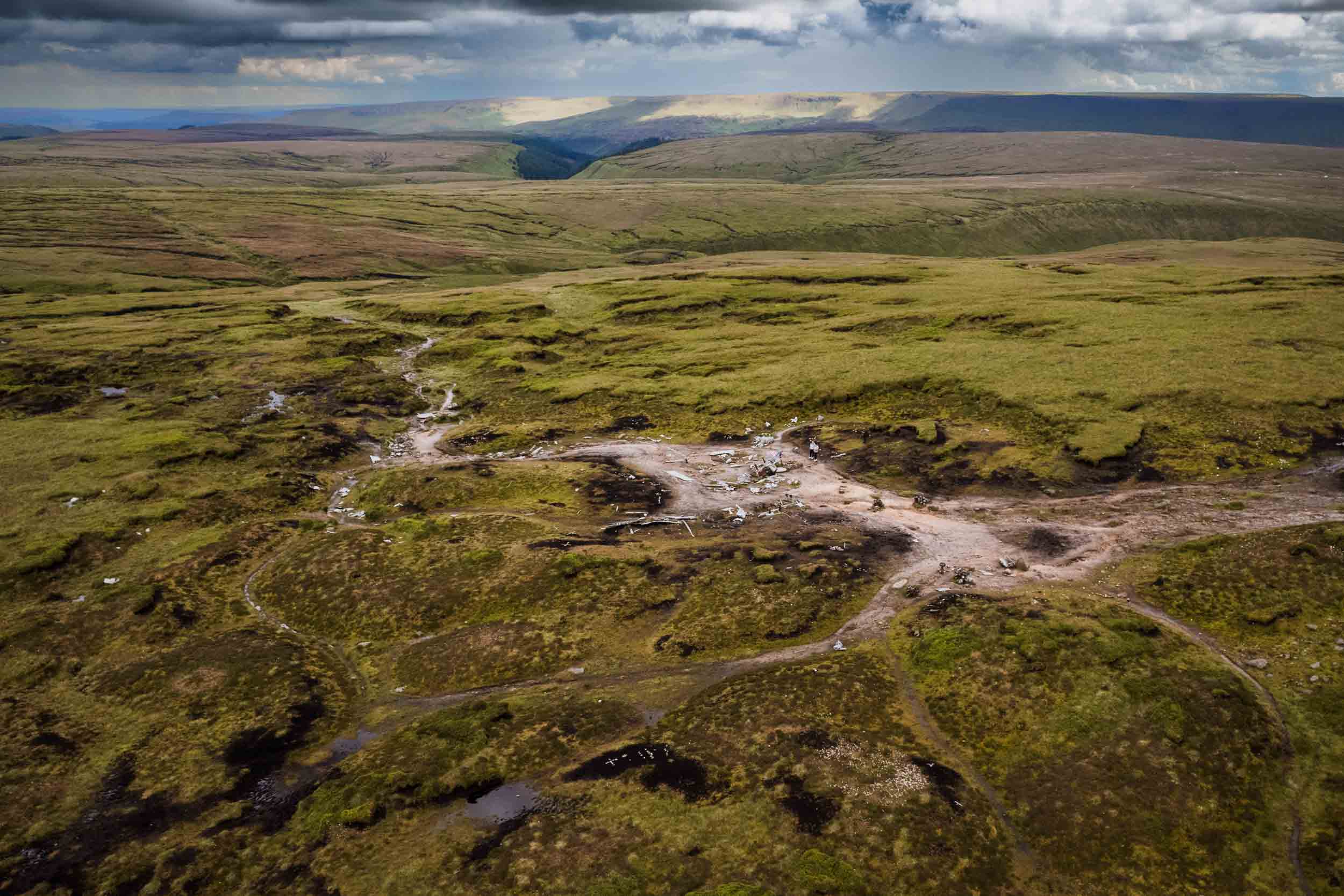
It was my first visit, and the walk took longer than I expected. Bleaklow is a wide, featureless plateau of peat and heather, and even on a calm day it feels remote. Then, just past the trig point at Higher Shelf Stones, the ground suddenly turns silver.
The story of Over Exposed
The aircraft was a Boeing RB-29A Superfortress, serial 44-61999, of the US Air Force’s 16th Photographic Reconnaissance Squadron. In 1946 it flew during Operation Crossroads, photographing the nuclear tests at Bikini Atoll, and in 1948 it took part in the Berlin Airlift.
On 3 November 1948 it was on a routine flight from RAF Scampton in Lincolnshire to the American base at Burtonwood near Warrington. Flying in low cloud over the Peak District, it struck the moor near Higher Shelf Stones at around 11 in the morning. All thirteen men on board were killed.
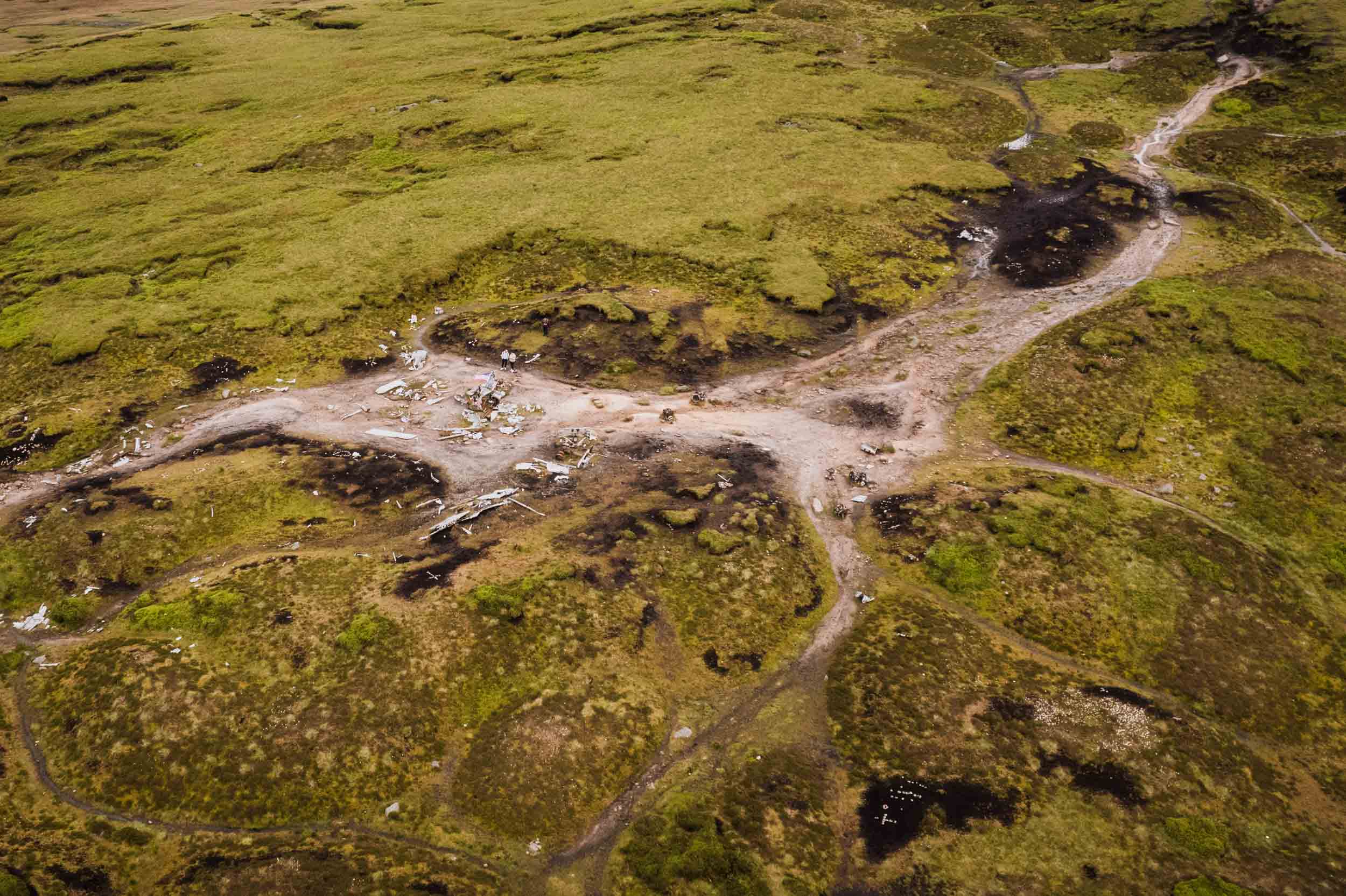
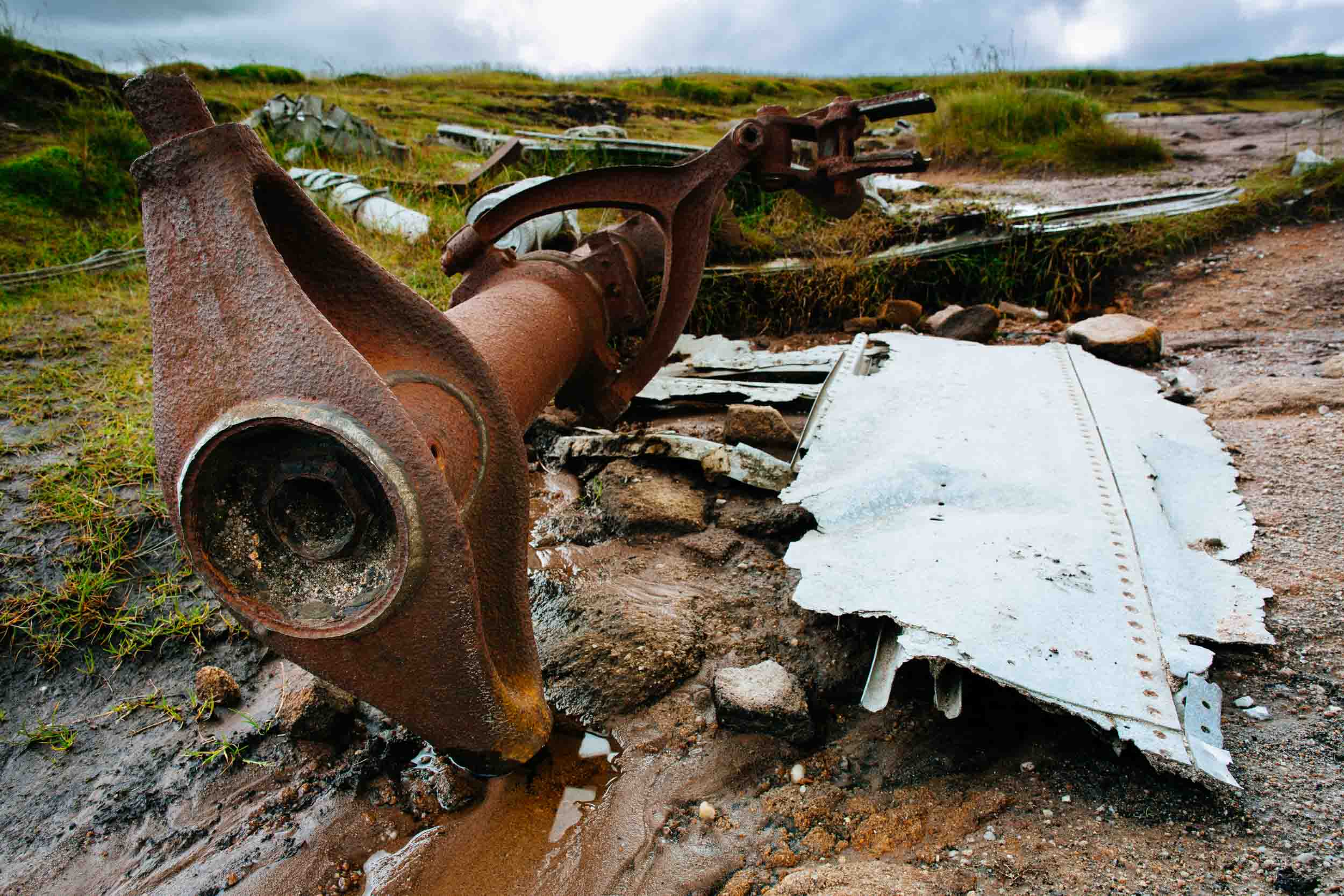
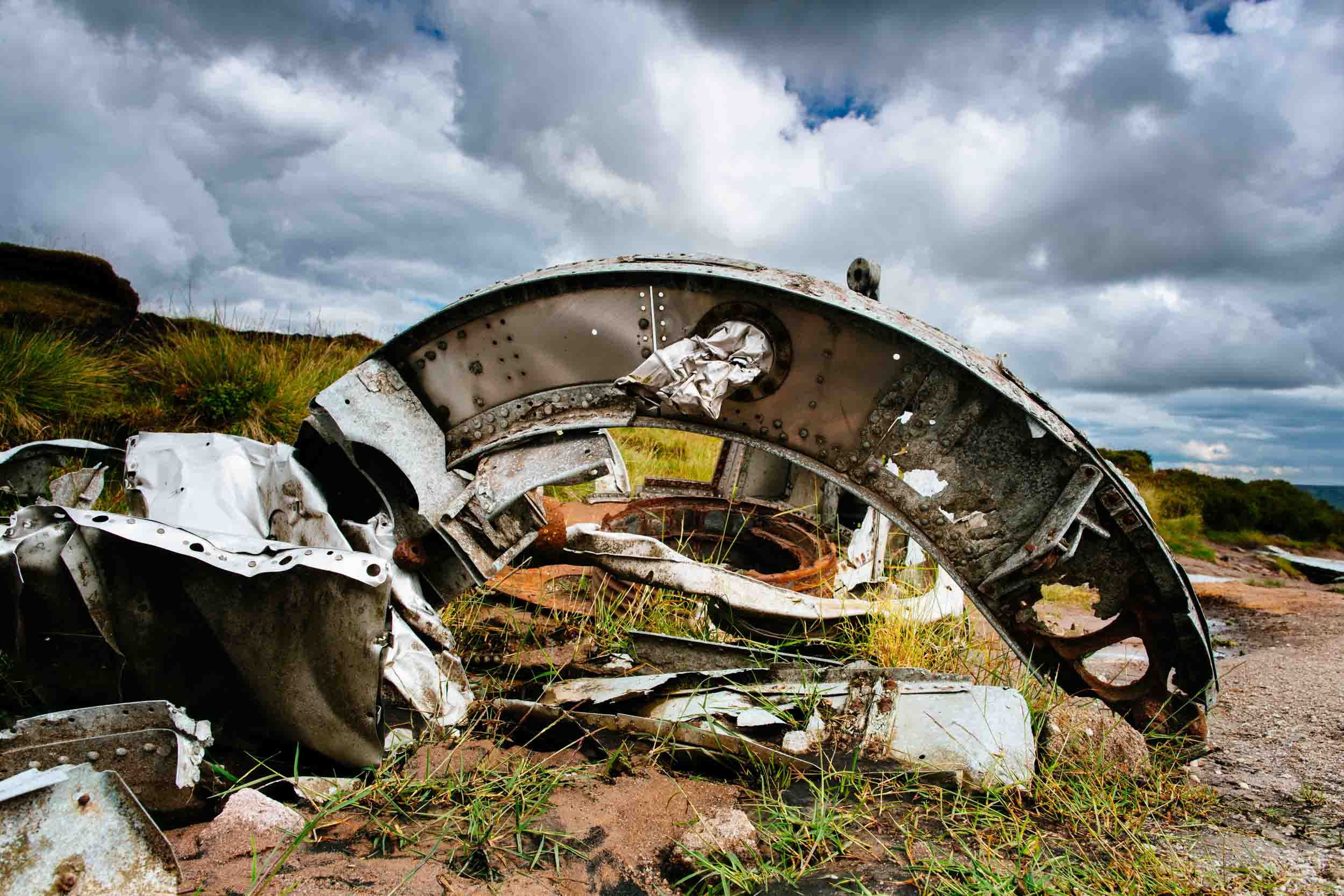
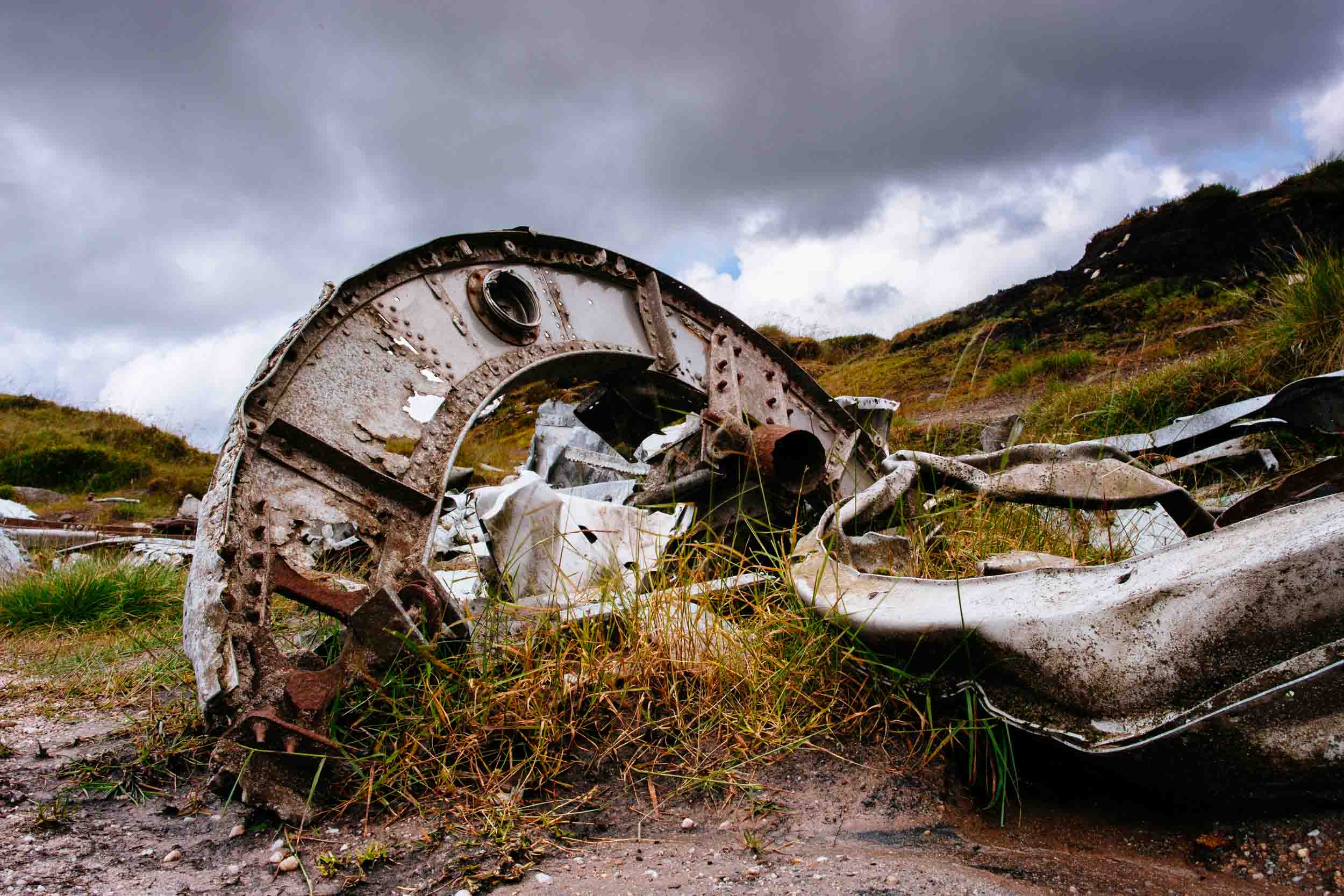
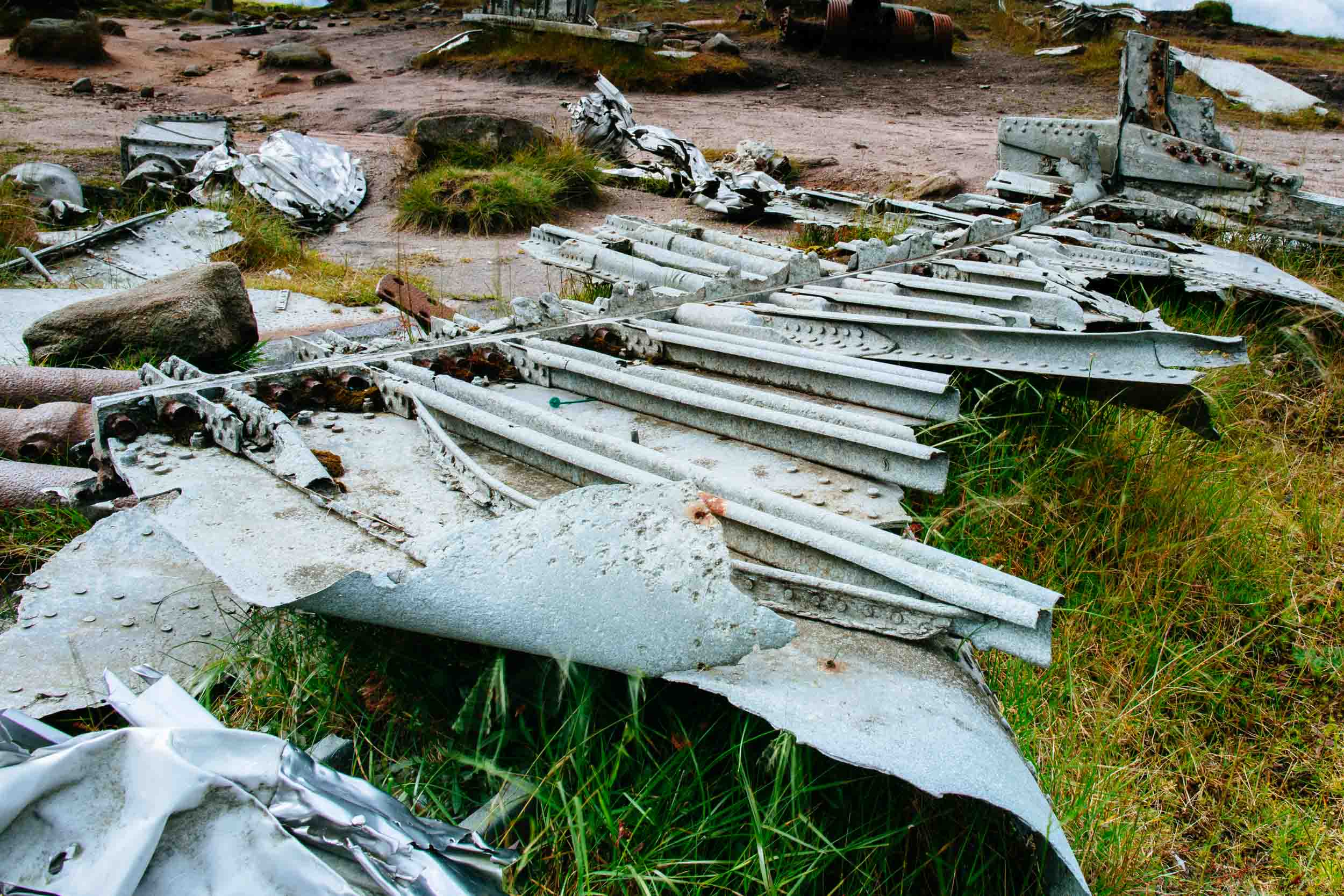
The wreckage was never fully removed. It is still there today, spread across the peat – engines, undercarriage, sections of fuselage and wing.
The engines
The first thing that stops you is the engines. Four huge Wright Duplex-Cyclone radials once pulled this aircraft through the sky; now they sit half-buried in grass, their cylinders peeled open by weather and time.
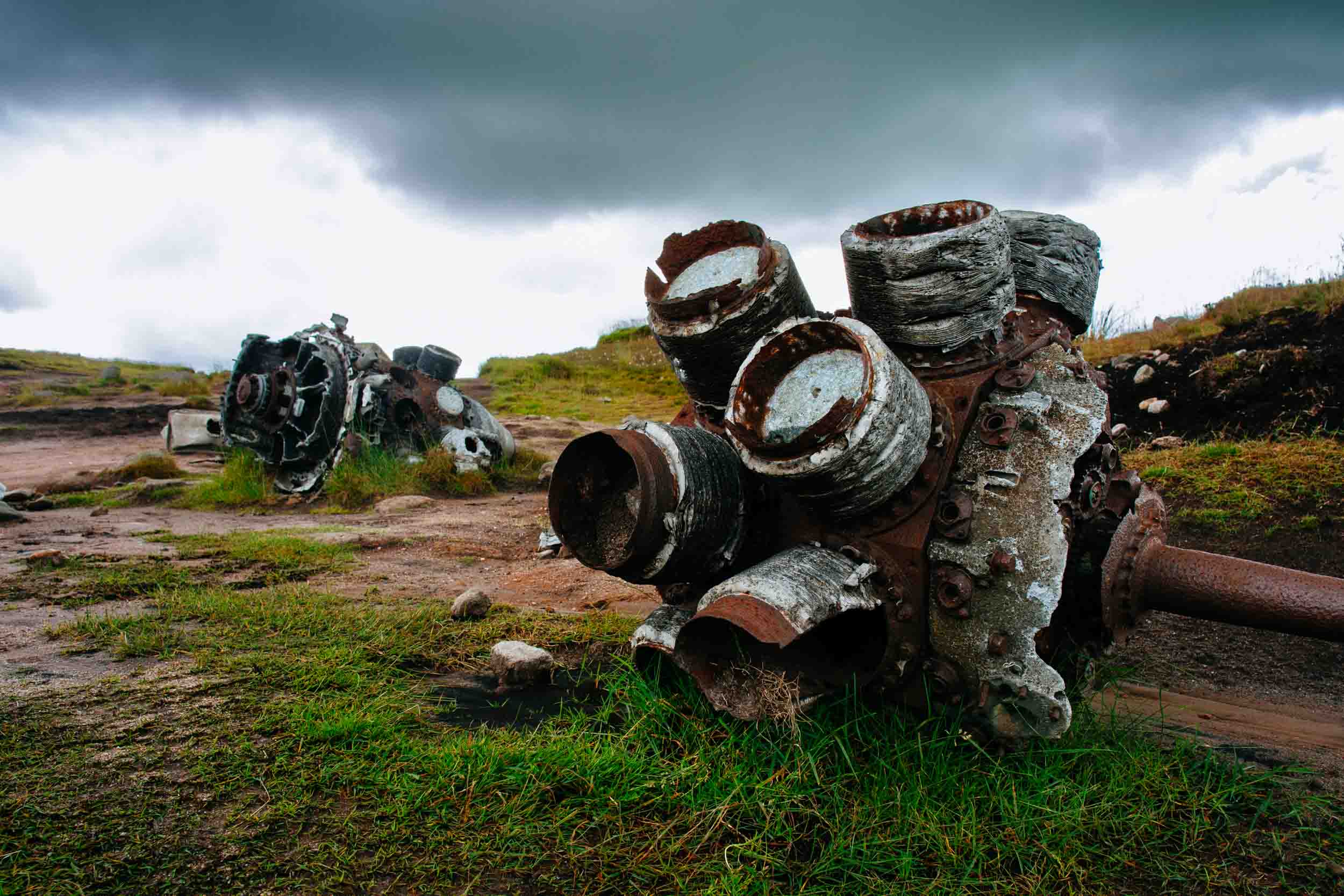
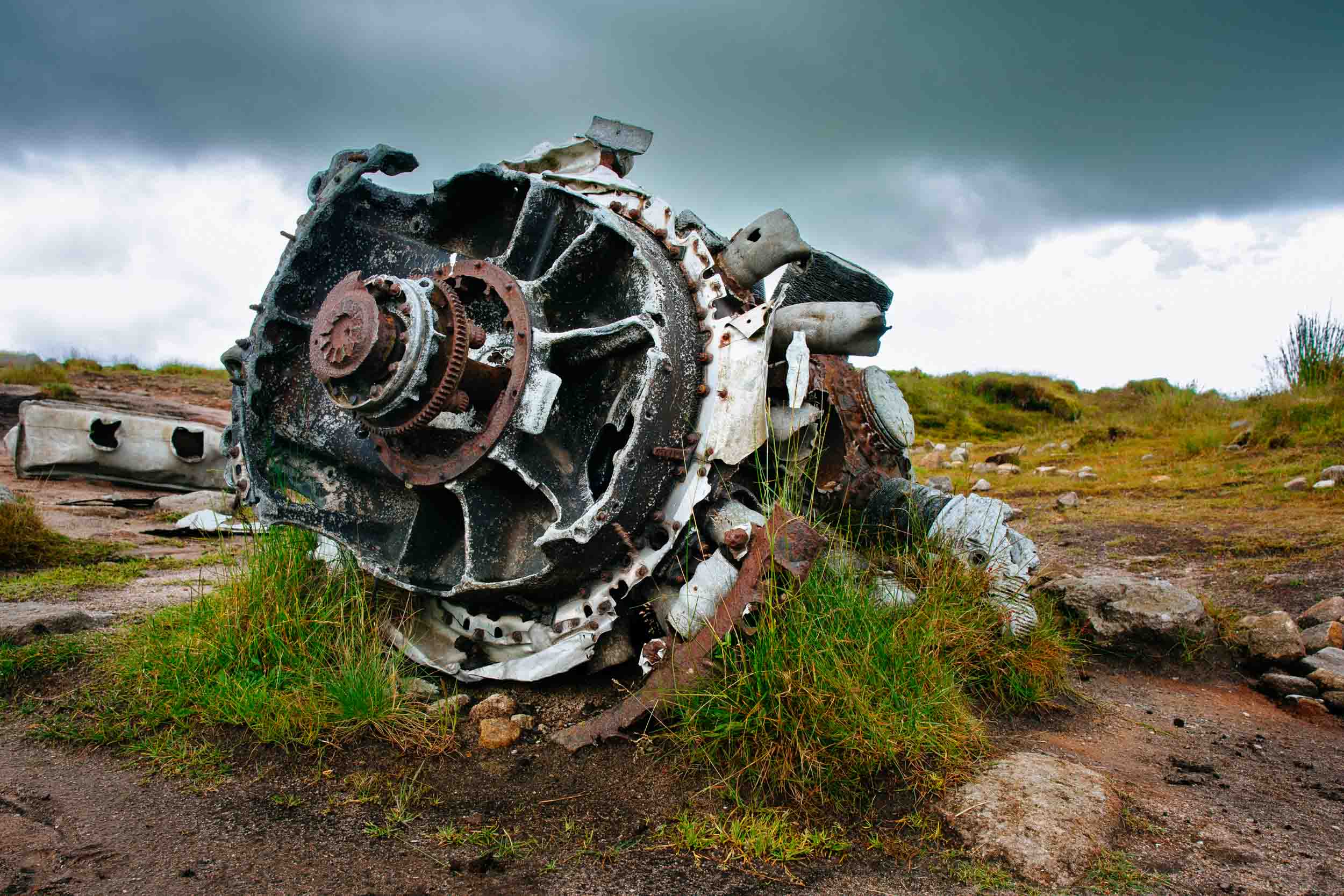
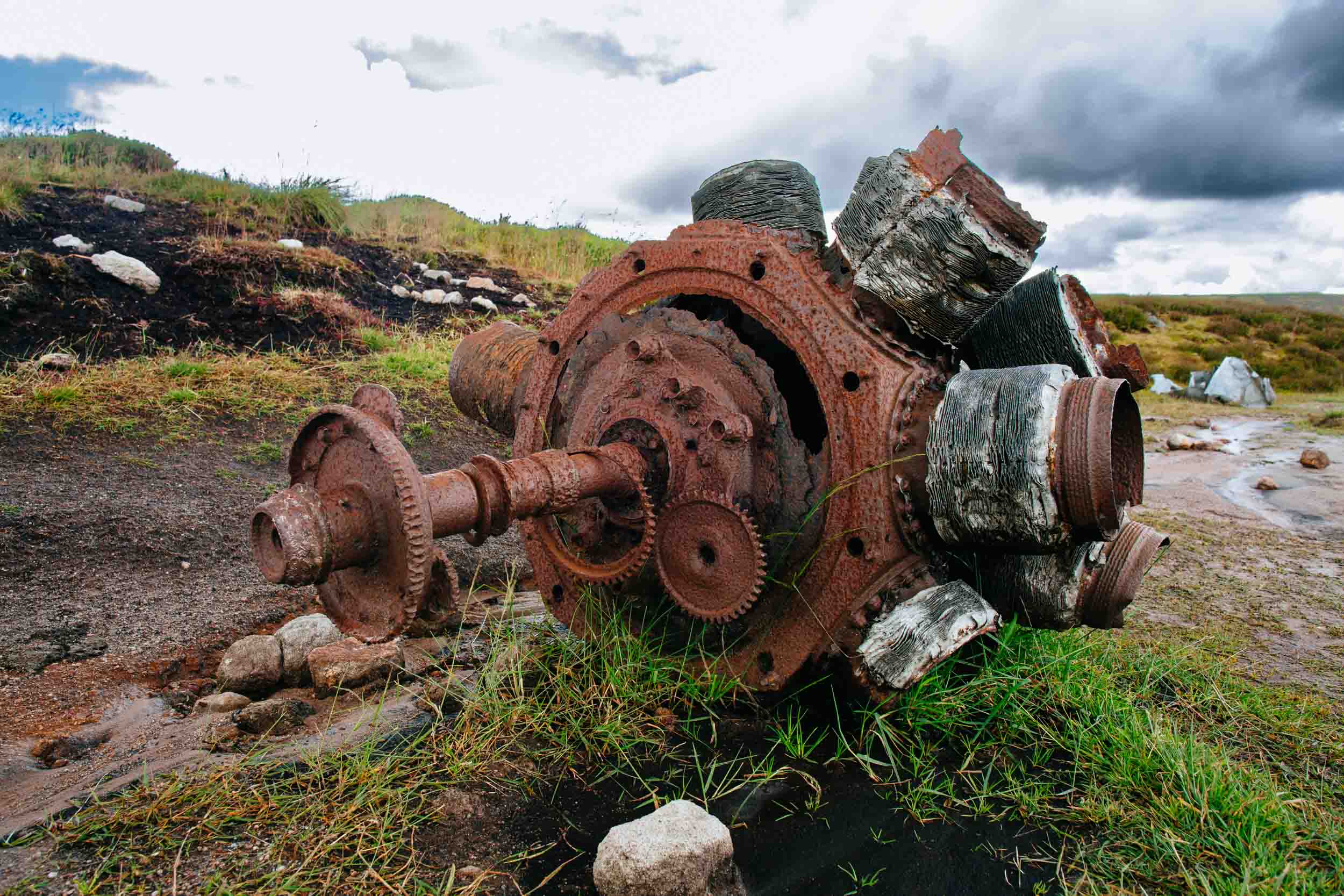
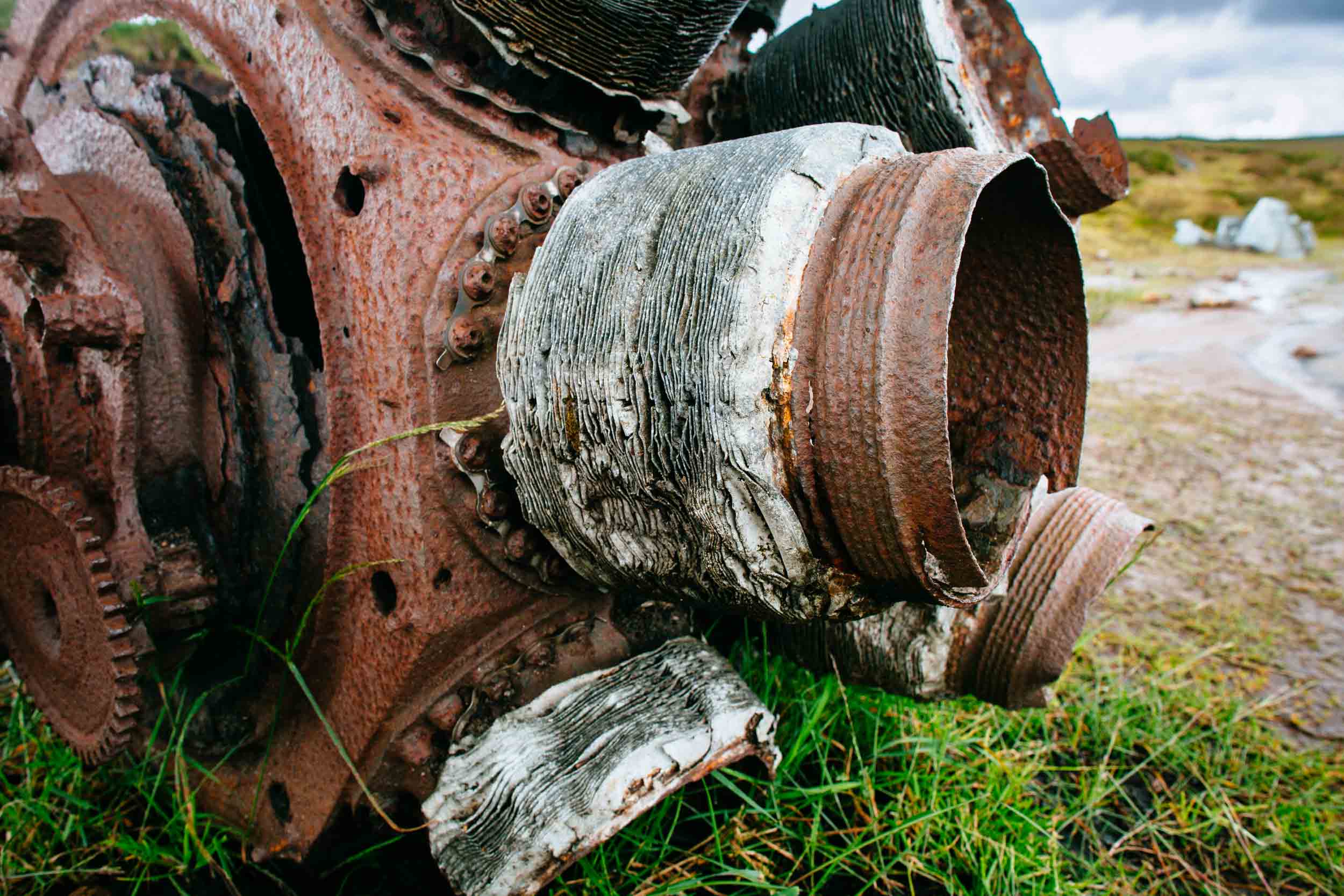
Up close, the textures are incredible – rust in every shade of orange and brown, cooling fins flaking away like layers of paper.

Shine and decay
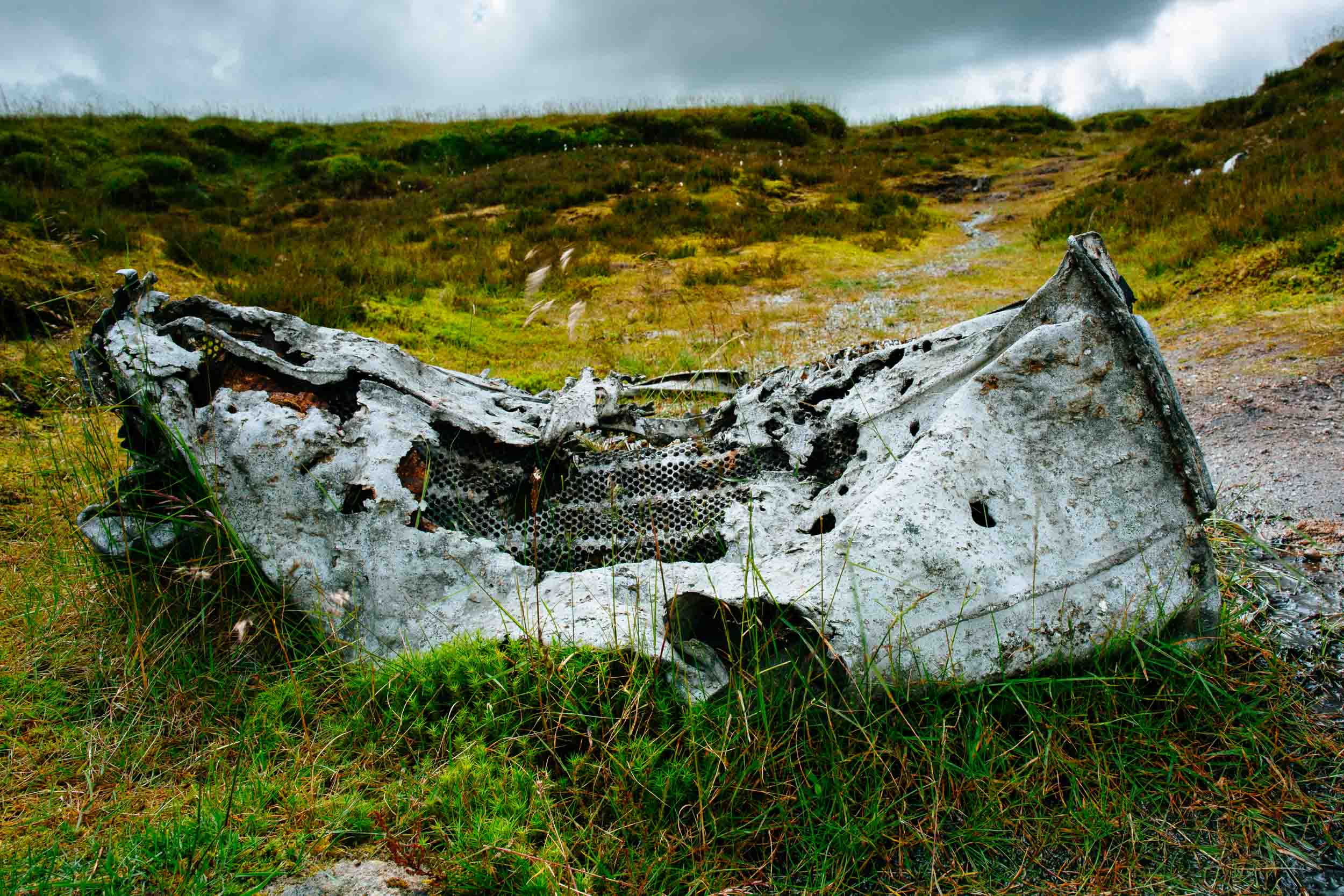
What surprised me most was the aluminium. Some pieces of the aircraft’s skin looked almost new – bright and clean, as if polished by decades of rain and wind. Others right next to them were dull, pitted and weathered, clearly marked by time. That contrast between shine and decay is what I kept coming back to with the camera.
The memorial
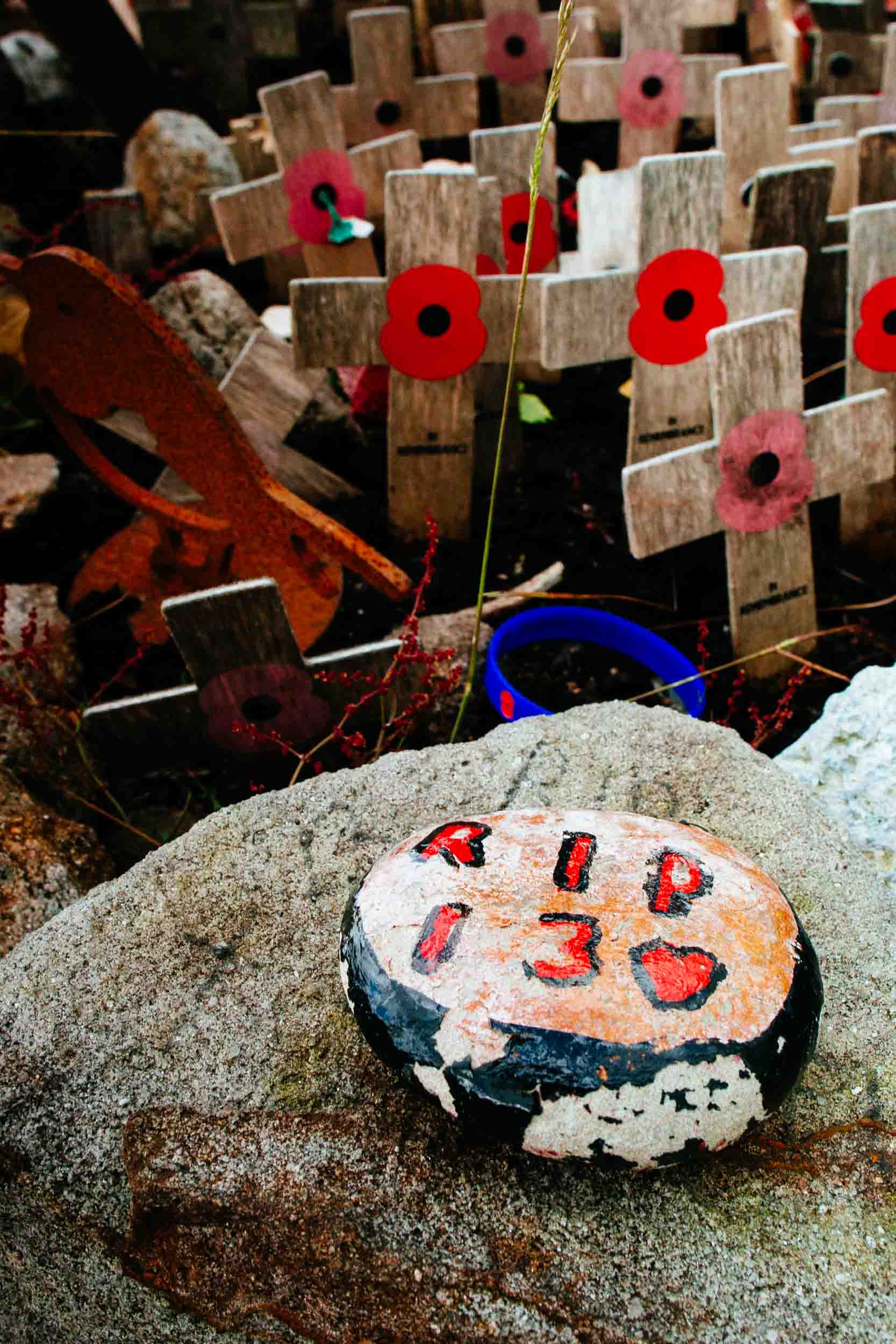
Walking among the scattered wreckage, you cannot stop thinking about the thirteen men who died here. Visitors have made crosses out of stones in the peat. There are poppies, small wooden crosses, a wreath, and an American flag tied to part of the undercarriage. Every so often the breeze lifted the flag and let it fall again.
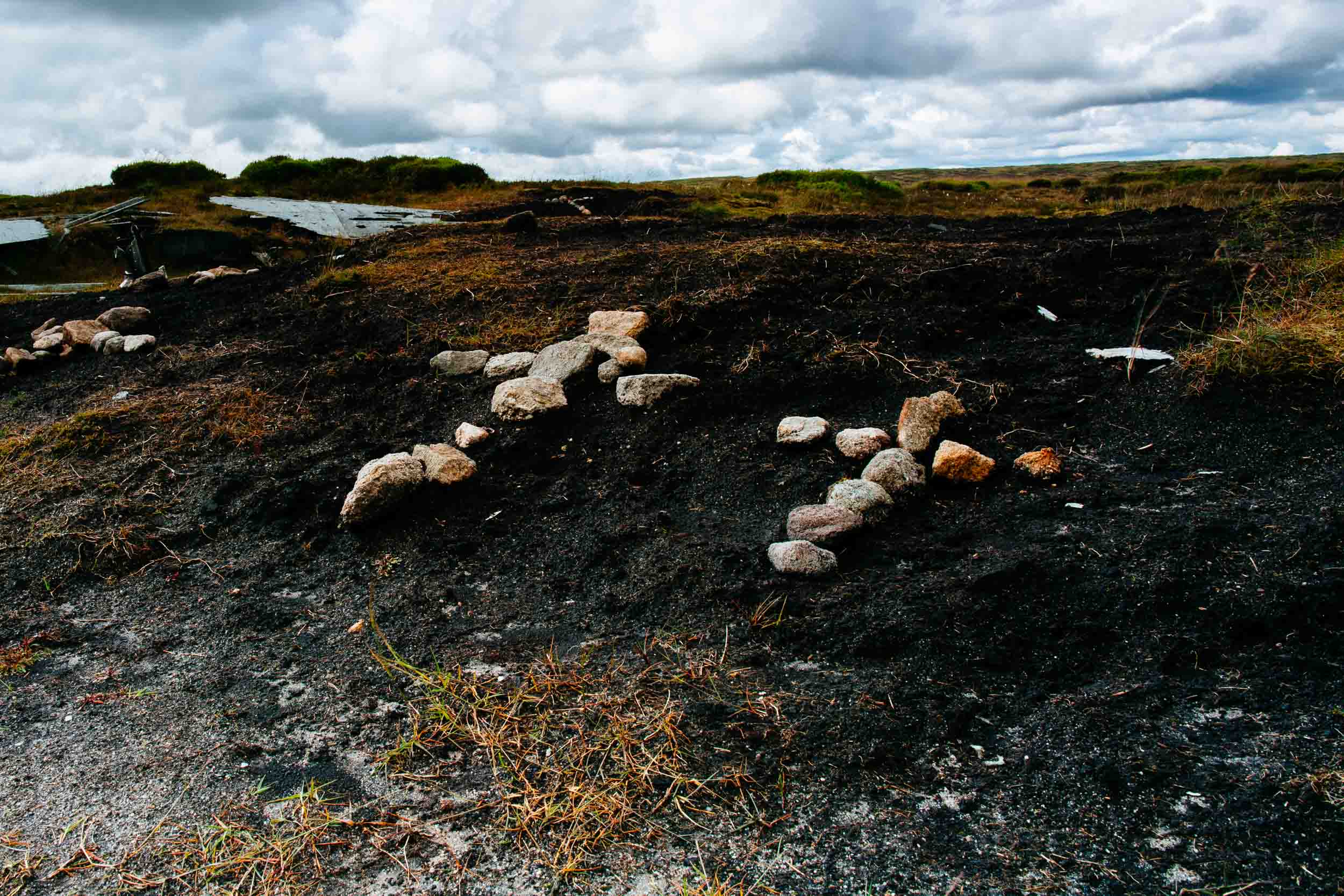
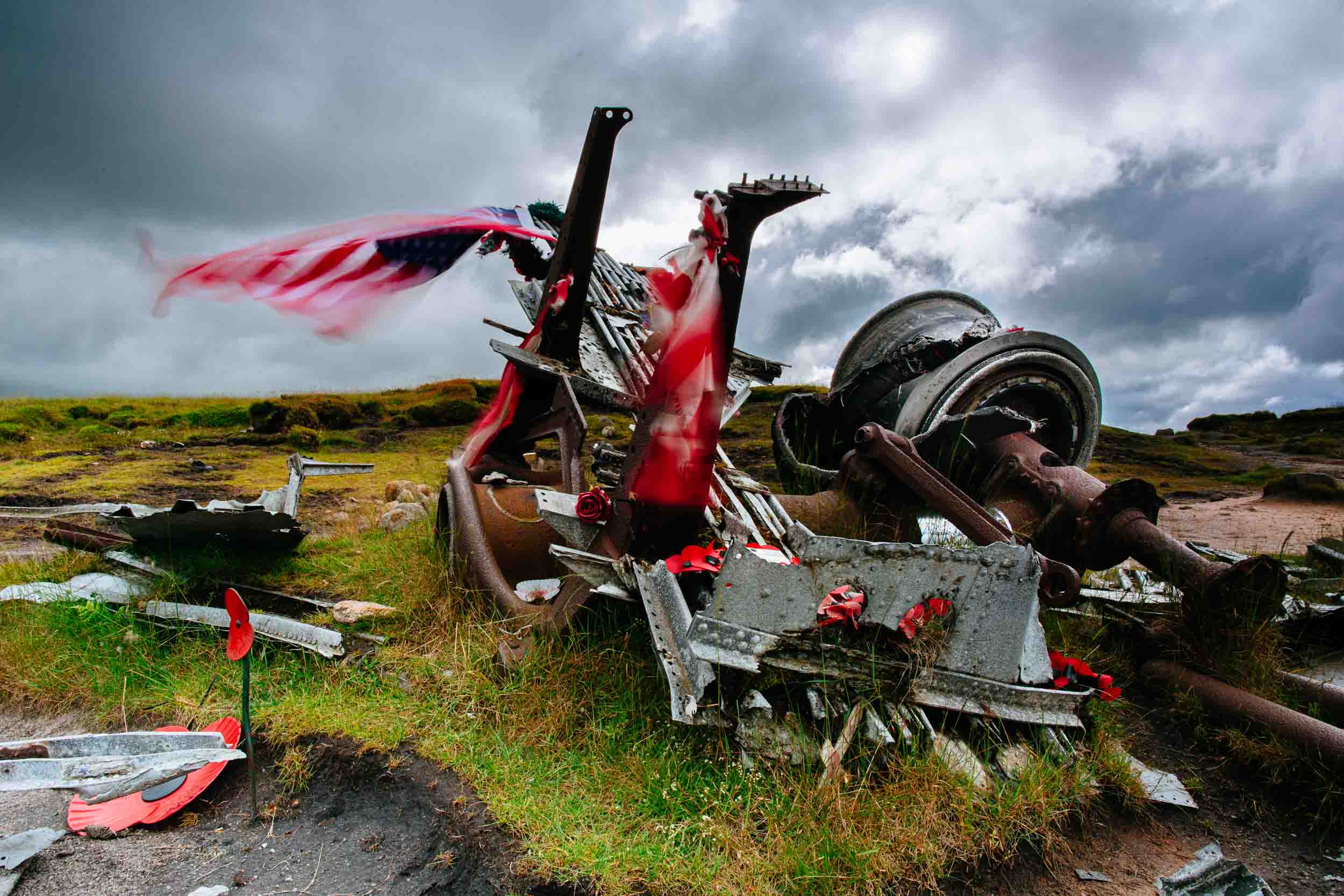
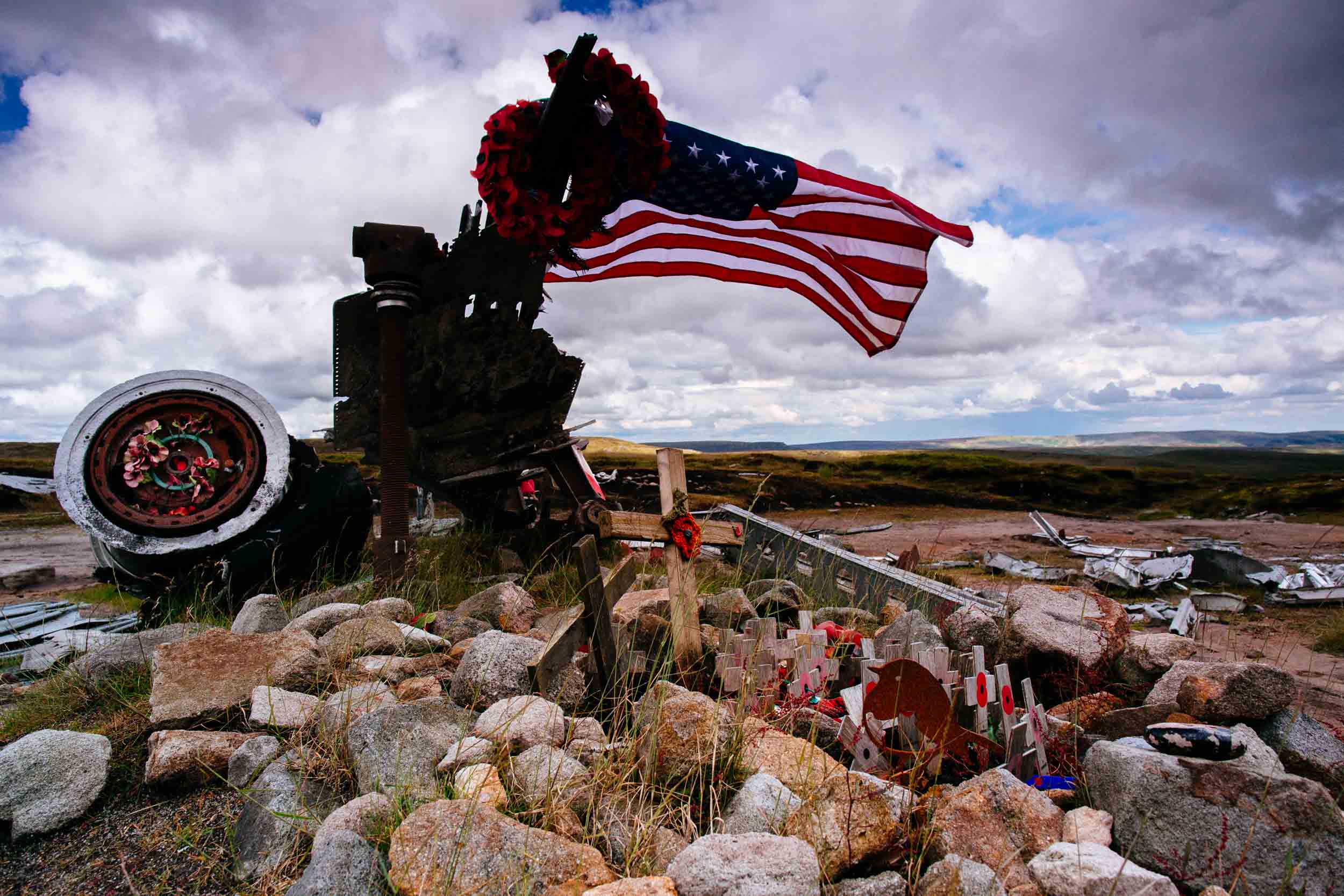
A memorial stone was placed here in 1988 by servicemen from RAF Finningley, and people still climb up to leave something behind.
While I was there, a family sat down beside the wreckage and had a picnic – sandwiches, flasks of tea, laughter. I don’t want to judge anyone; perhaps it is a difference in culture. But where I come from, in Poland, a place where people lost their lives is treated with quiet respect, the way you would treat a grave. I found it hard to watch. If you visit, please remember that this is not just a landmark on a walking route. It is where thirteen young men died.
Getting lost on the way back
The return taught me a lesson. Heading back across the moor, I followed a stream and, on the low, wide, featureless ground, lost the path completely. When I finally wanted to cross the water, it was too deep where I needed to cross, and I had to search for another way.
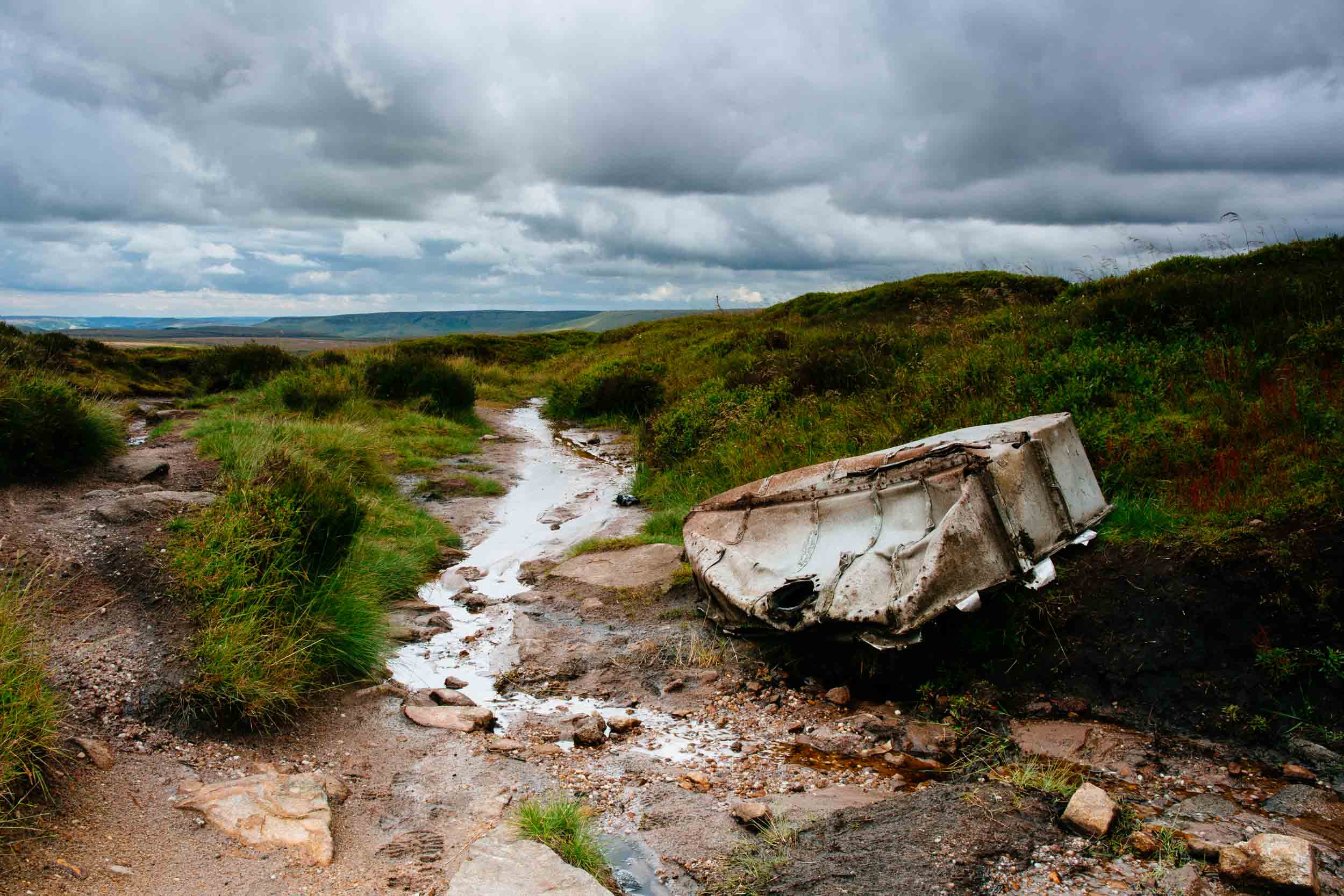
Nothing serious happened, but it was a reminder of how easy it is to get disorientated on Bleaklow, even in good weather. After this trip I bought a handheld Garmin GPSMAP 64s, so I can always see where I have walked and find my way back. If you are planning to visit, take a map, a GPS or a reliable app, and don’t rely on the paths being obvious.
Visiting the B-29 crash site
- Where: Higher Shelf Stones, Bleaklow, near Glossop, Peak District
- Parking: the lay-by on the Snake Pass (A57), then the path up towards Higher Shelf Stones
- Distance: roughly 2 miles each way over rough, boggy ground
- Take: waterproof boots, a map or GPS, and extra time
Thirteen
The last thing I photographed before leaving was a small painted stone among the crosses. It simply said “RIP 13”.