
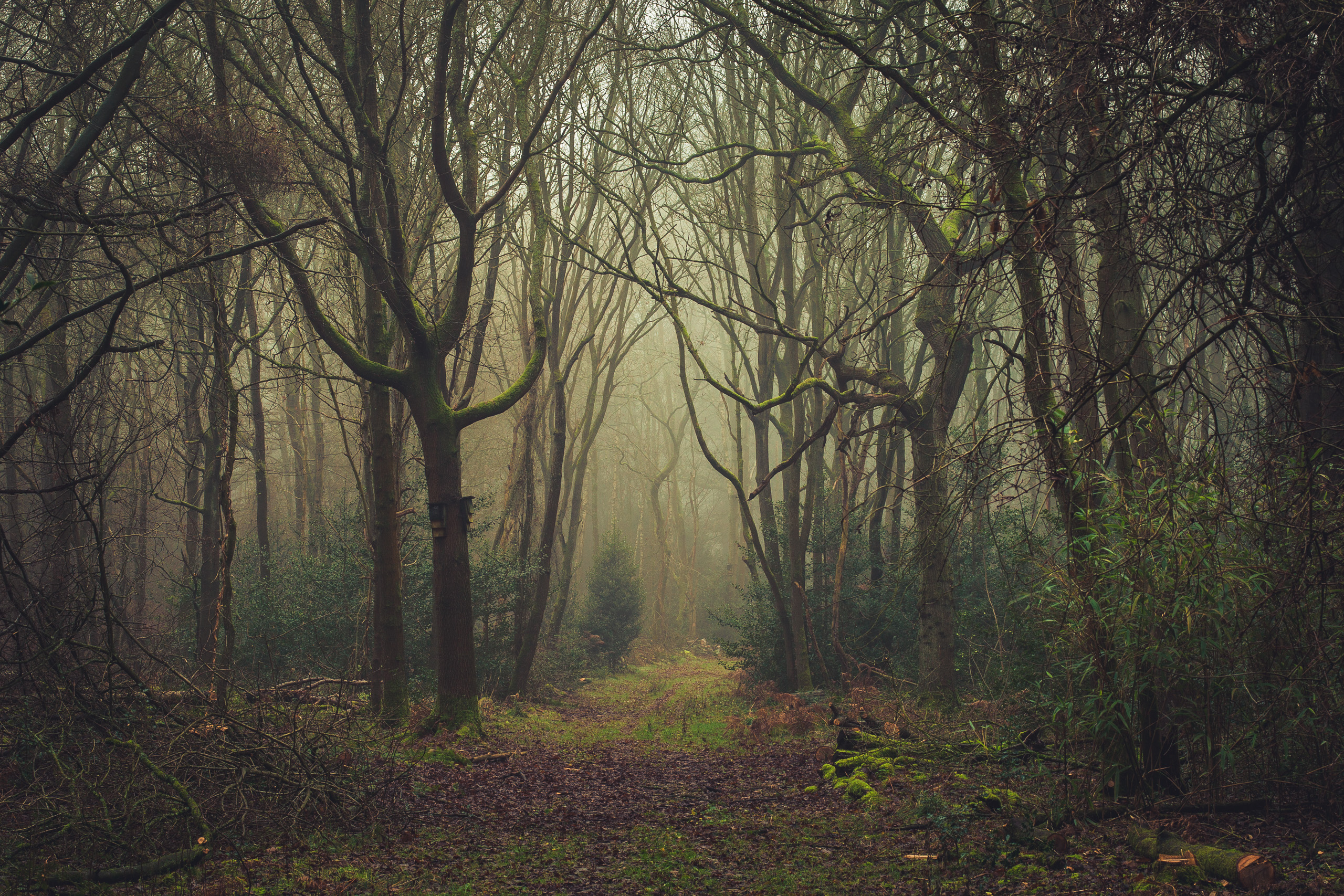
There is a kind of tiredness that sleep doesn’t fix. It sits somewhere behind the eyes and under the ribs, and it makes everything, even the things you love, feel a little further away. I’ve been carrying it for a while now. The camera has spent more time in the bag than in my hands, and the folders on my laptop have quietly filled up with photographs I never found the energy to open.
This is one of those folders. I made these images almost a year ago, on 21 December 2025, in a small woodland near Coalville in Leicestershire. I’m only sharing them now, and I think I finally understand why it took so long.
The shortest day, the softest light
The winter solstice. The shortest day of the year, the moment when the light runs out earliest and the year seems to hold its breath before turning back. There was no sunrise to chase that morning, no golden hour, no drama in the sky. Only fog, low and heavy, resting between the trees like something that had decided to stay.
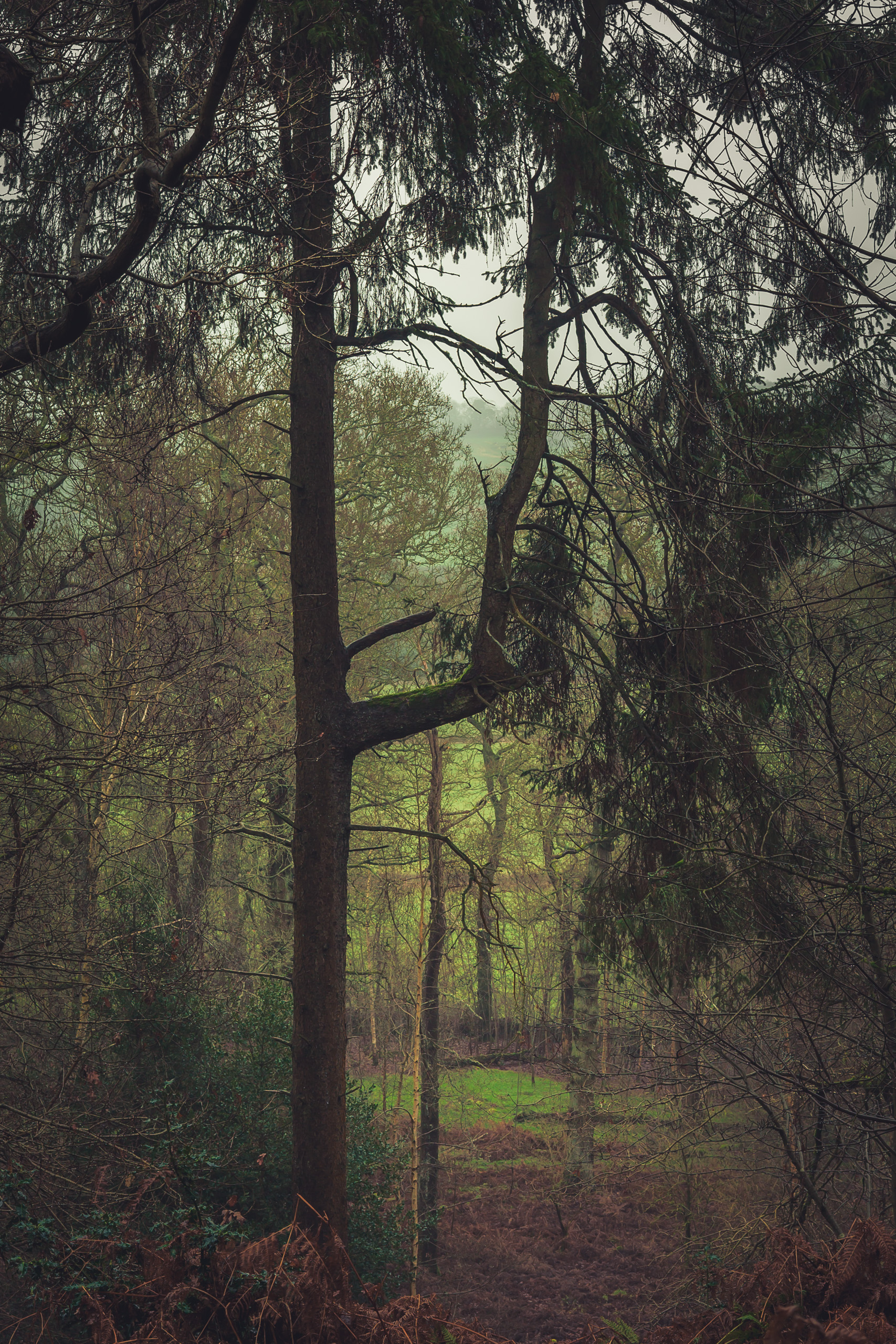
For winter woodland photography, that is exactly what you hope for. Fog does what no lens or filter can: it removes. It takes away the distracting background, the bright gaps in the canopy, the busy tangle of branches behind your subject, and leaves you with layers. Near trees dark and defined, the ones behind them softer, and the ones further back only a suggestion. You stop seeing a forest and start seeing relationships between individual trees.
Reading an old woodland
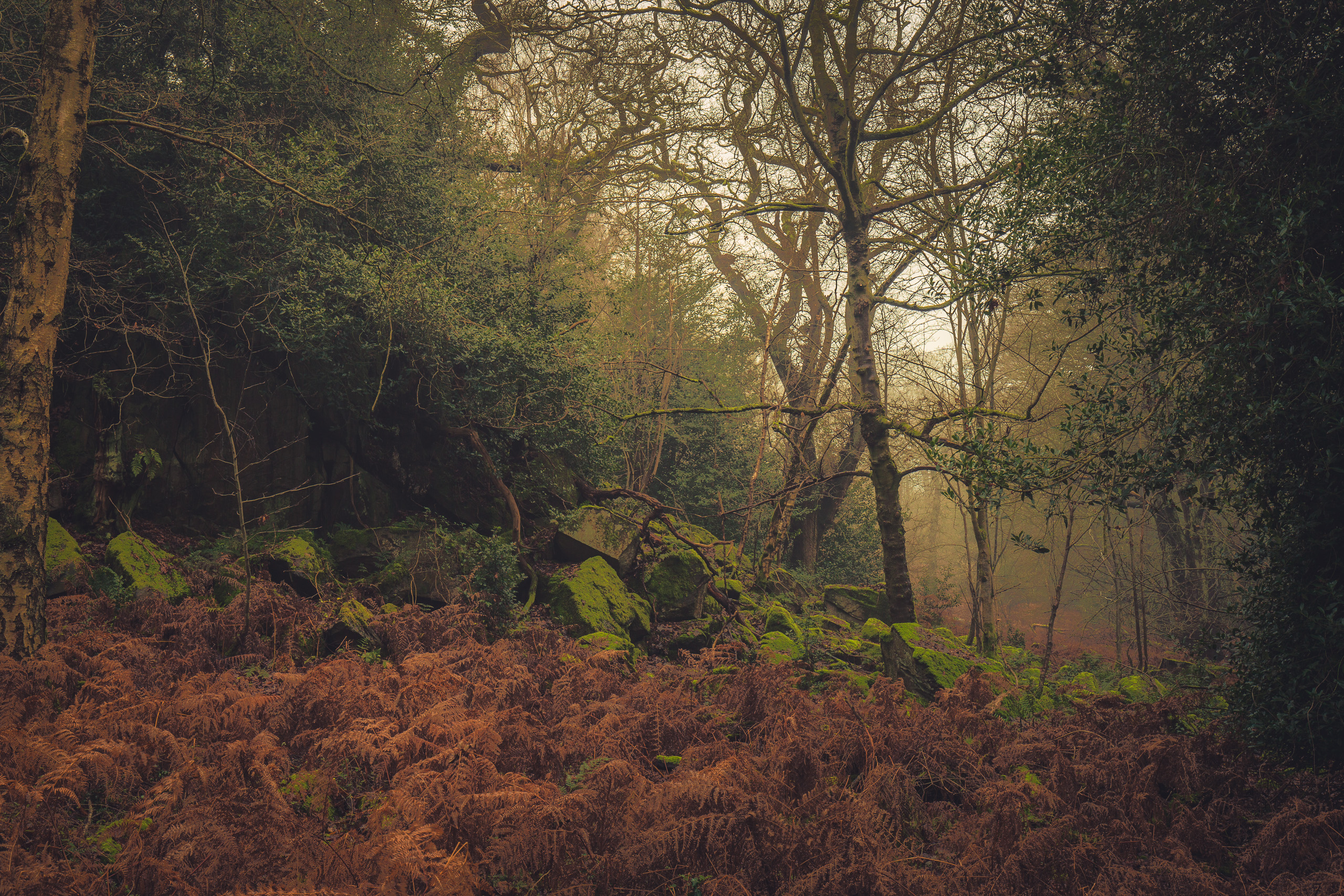
I’ve walked this wood many times, and every visit it shows me something different. Old oaks grow straight out of the rock here, their roots gripping boulders that are wrapped in moss so green it almost glows on a grey day. Holly fills the understorey with dark, glossy leaves. The bracken, bright and green all summer, had turned to rust and copper and lay collapsed across the slopes.
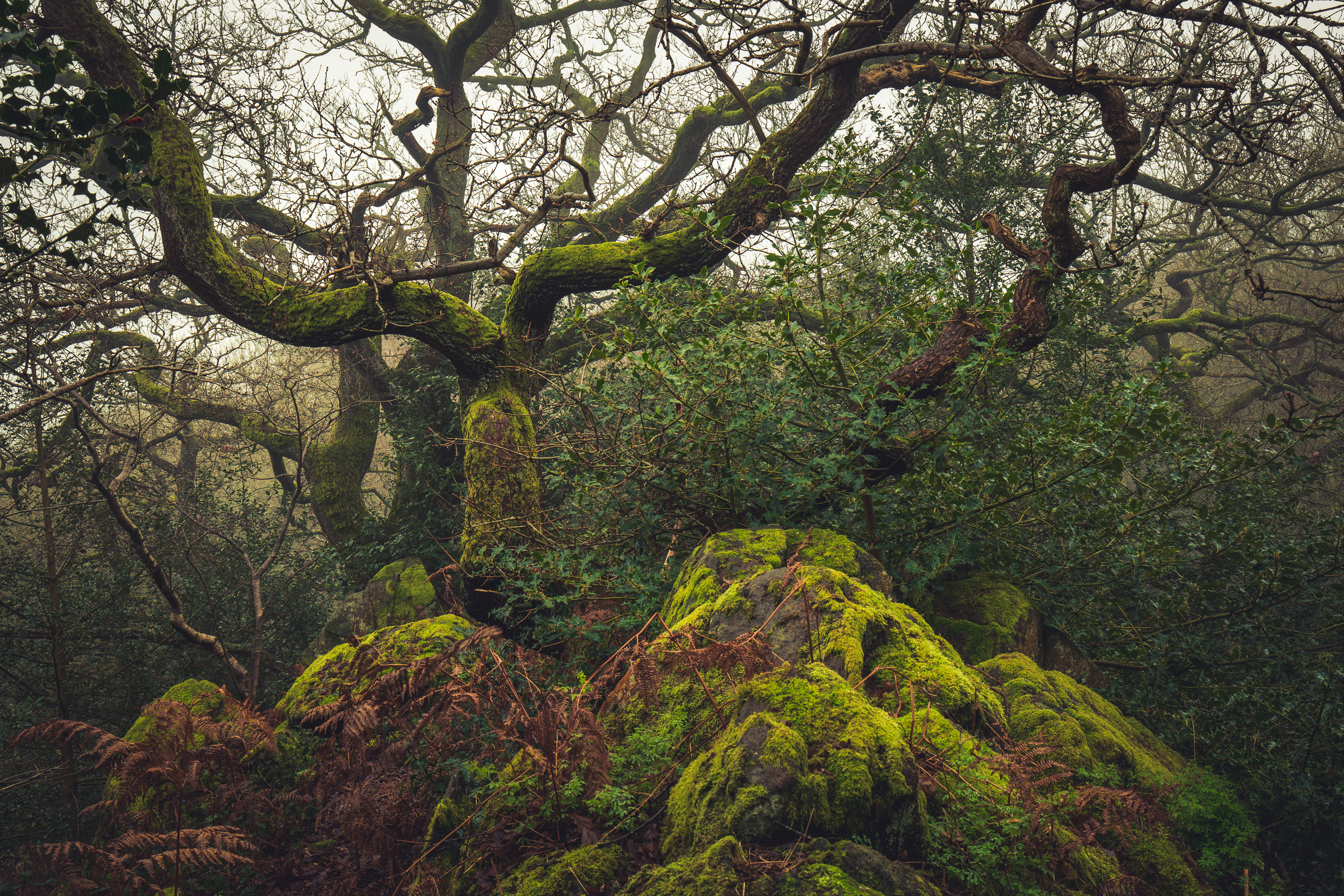
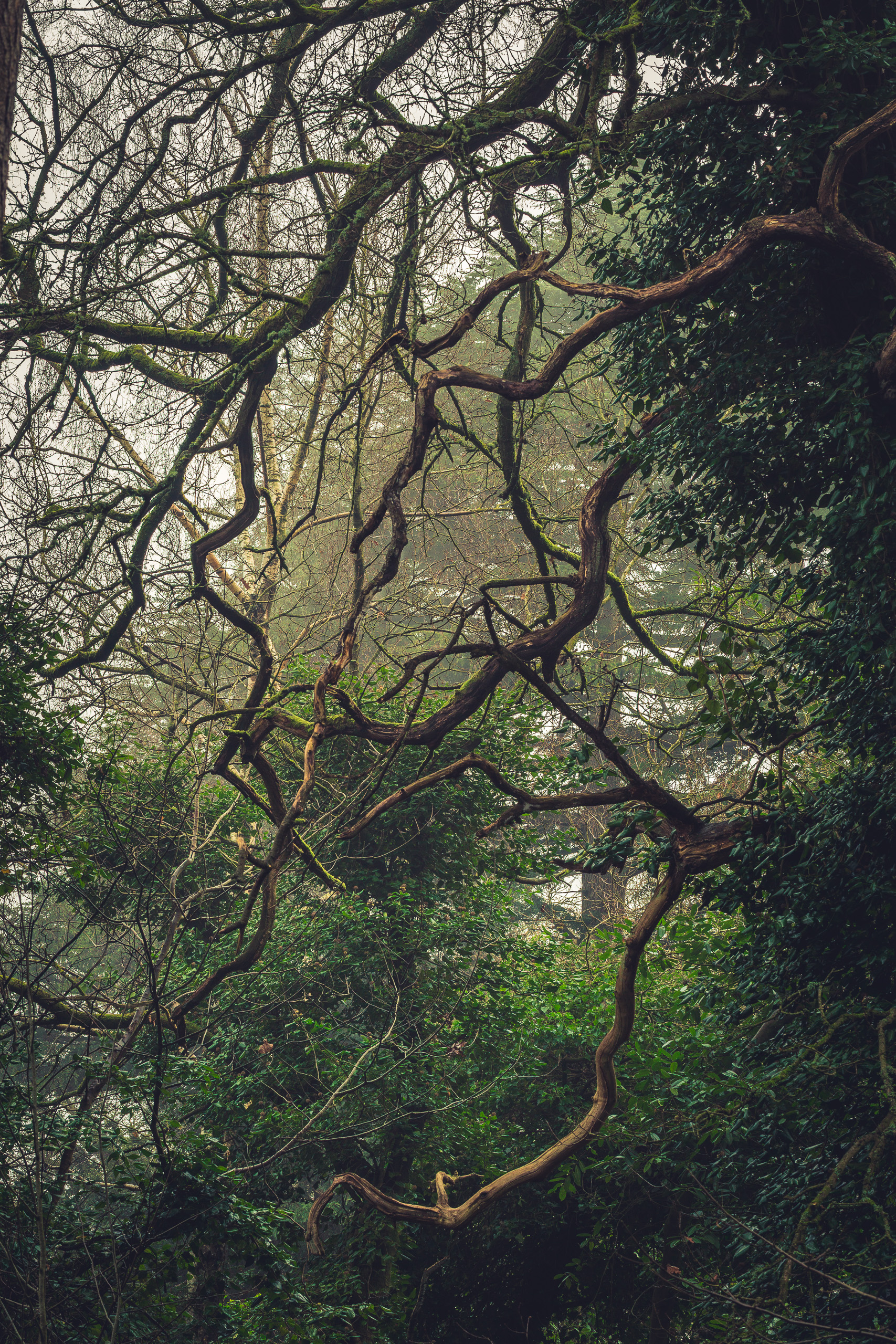
I stood in front of one oak for a long time. It sits on a mound of mossy stone like a king on a throne that has long been forgotten by everyone except the trees around it. Its branches twist outwards and upwards, each one a record of some decision the tree made decades ago: which way to the light, which way away from the wind. Nothing about it is straight. Nothing about it is tidy. And it is one of the most beautiful things I know.
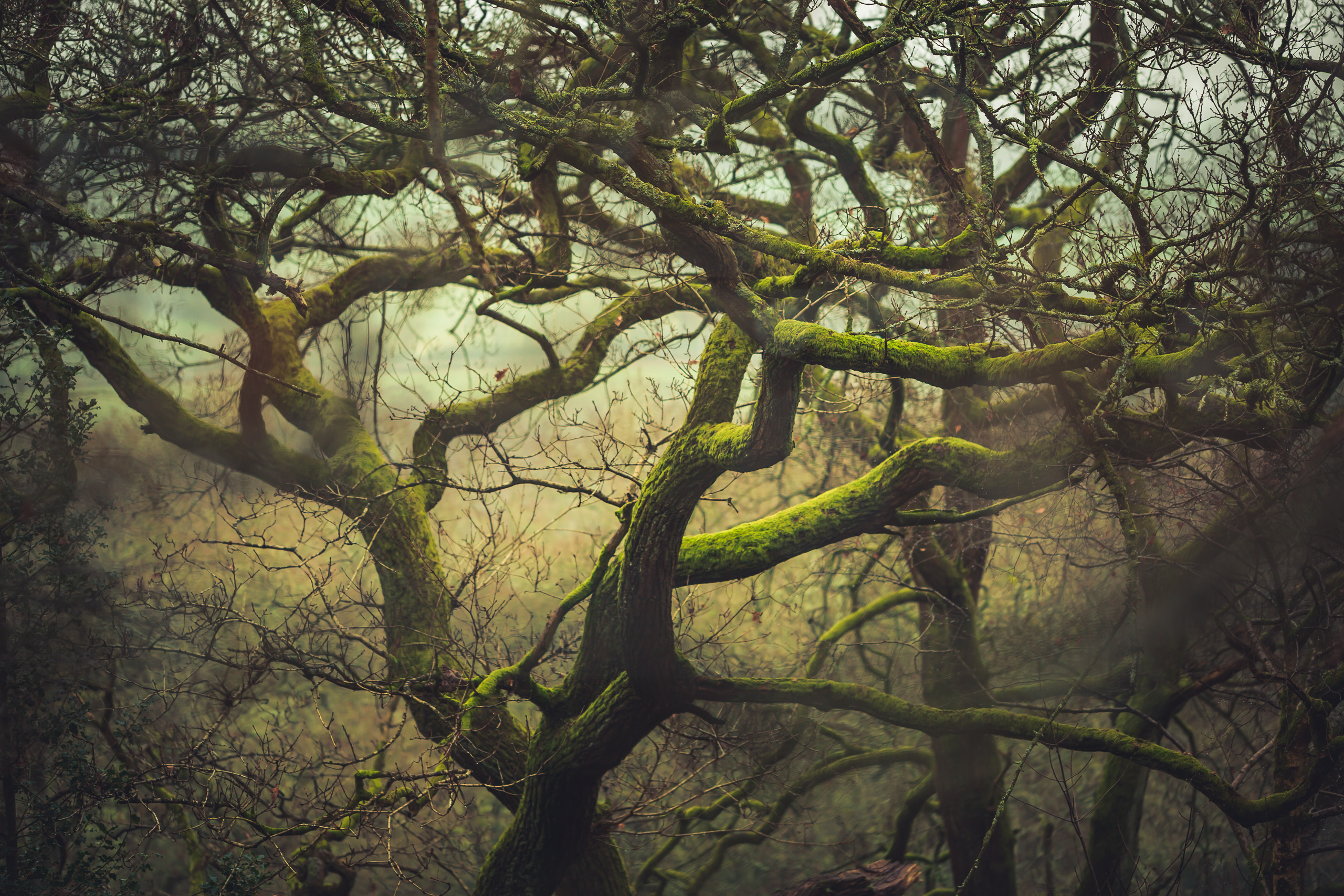
Look up in a wood like this and the canopy becomes a kind of slow dance. Lichen and moss climb along every limb, so the branches are less brown than green, and in the fog they seemed to move even though the air was perfectly still.
Small things, closer
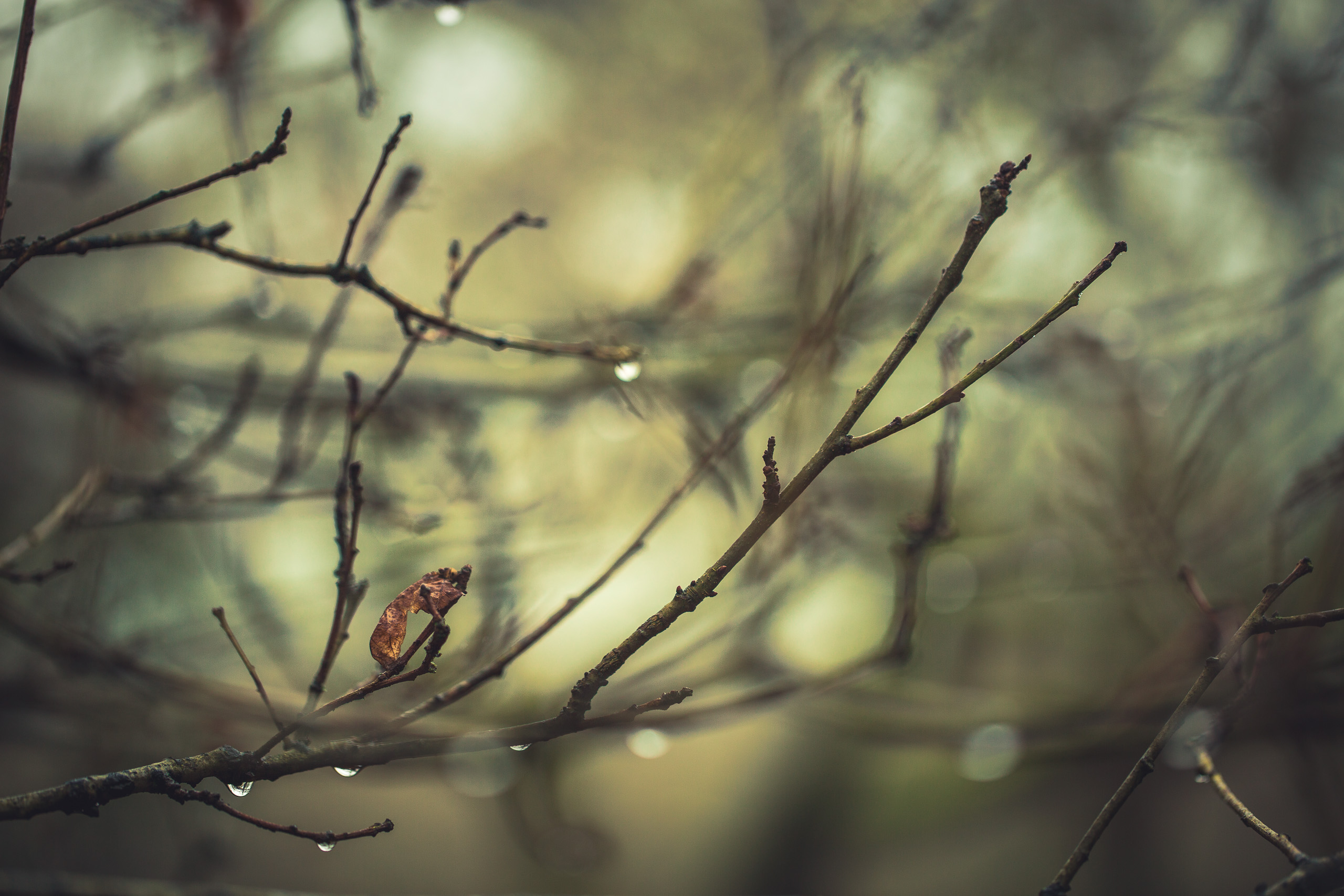
Some days the big scene doesn’t come together, and the only honest thing to do is to get closer. Raindrops hanging from bare twigs. A single dry leaf that refused to let go. On days when I feel flat and uninspired, this is often where the photographs are: not in the grand view but in the quiet detail most people walk straight past.
What the trees know about seasons
Here is the thing I keep coming back to. These trees were not dying. In summer they were full, loud with birds and heavy with leaves. In December they stood bare, stripped back, holding almost nothing. It looks like loss, and in a way it is. But it is also how they survive. They let go of what they cannot carry through the winter, they slow down, and they wait.
I’ve been thinking a lot about that. About how burnout feels like being one of these trees in December: everything that made you feel alive has fallen away, and what is left feels grey and exposed. Maybe that isn’t failure. Maybe it’s just a season. The oak doesn’t apologise for being bare in winter.
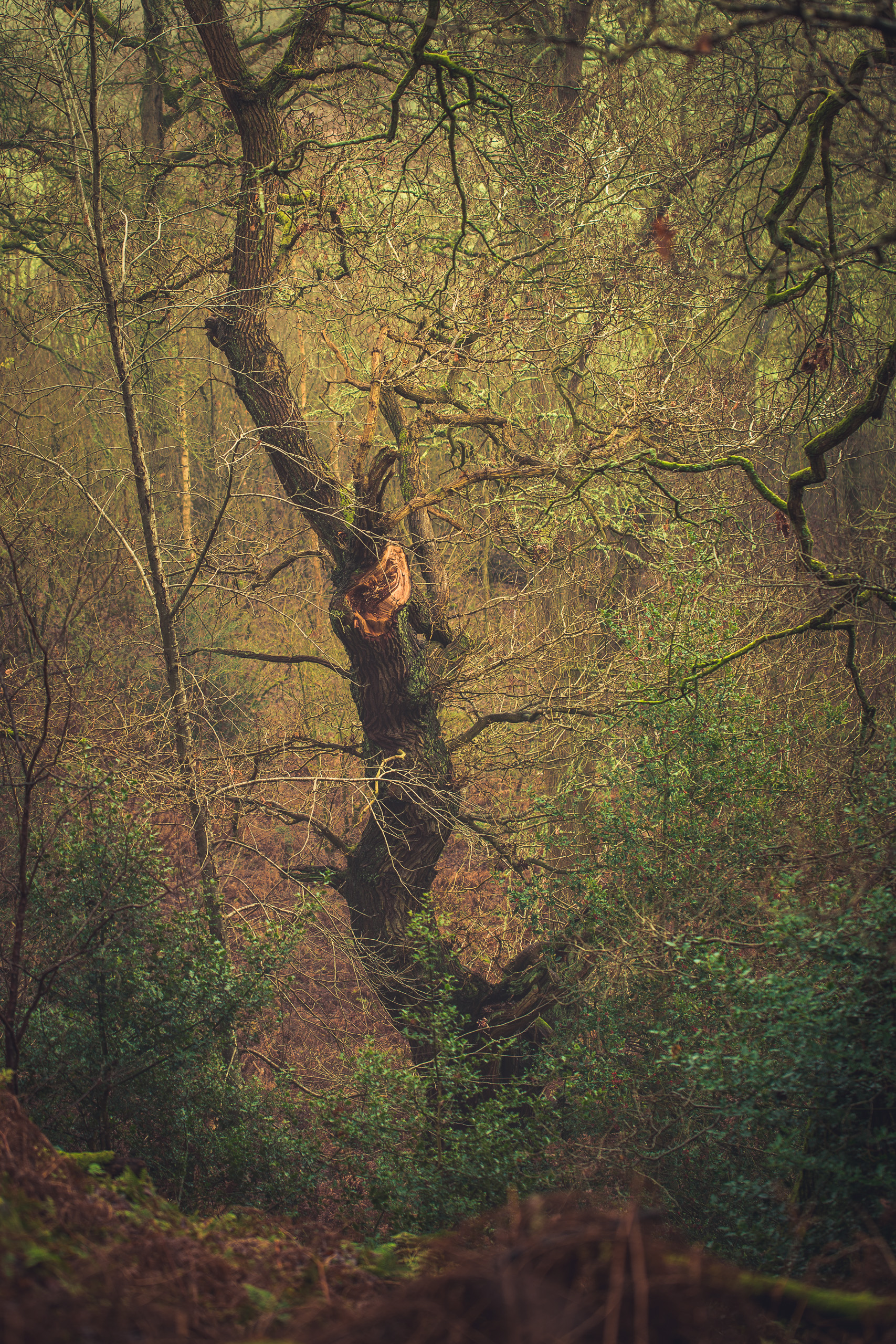
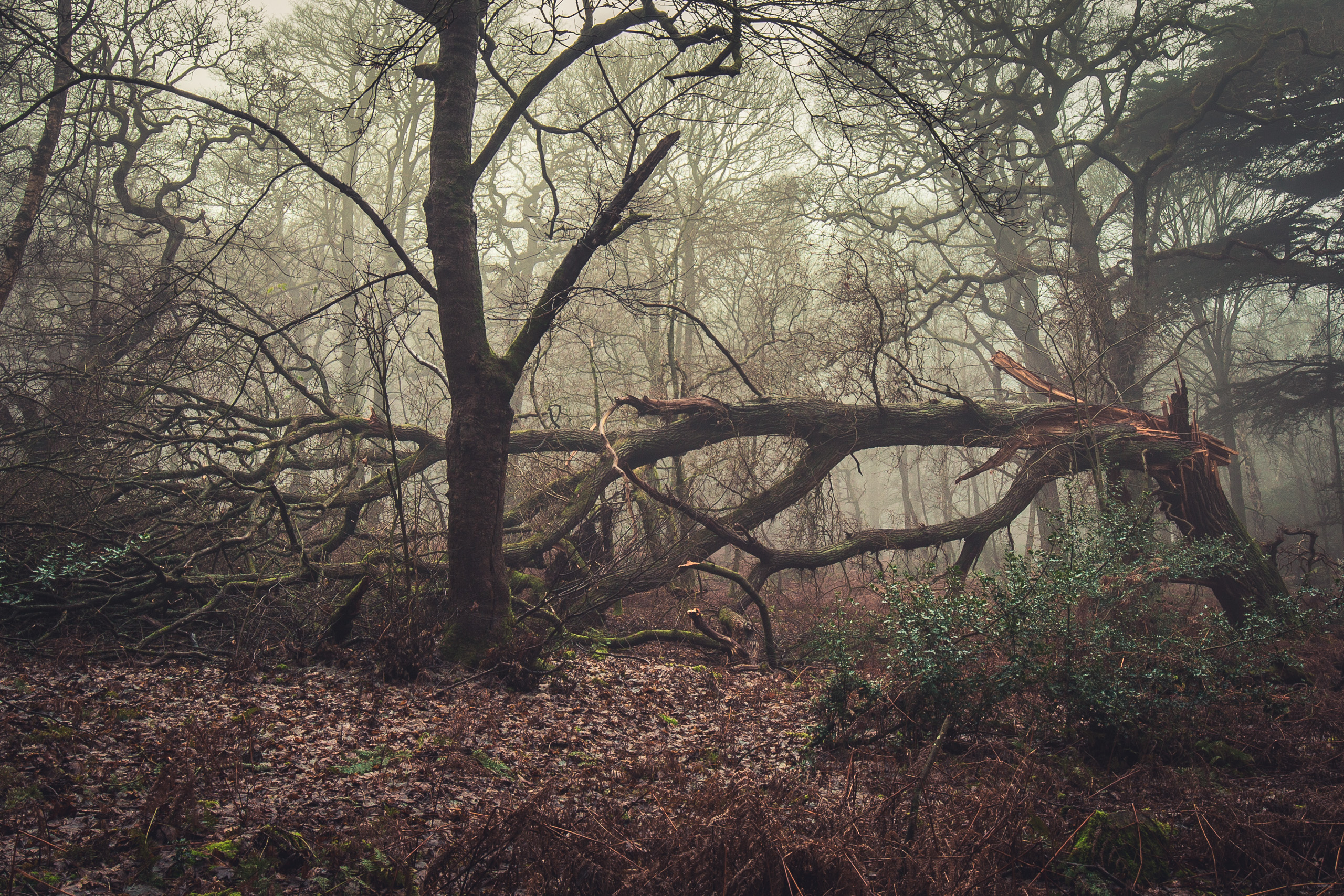
Some trees in this wood carry fresh wounds. A broken limb, the pale orange heartwood suddenly open to the weather. Others have fallen completely, their trunks lying across the forest floor with the splintered ends still raw. And yet, around them, moss is already moving in, holly is growing through, and the wood carries on.
The water keeps moving
Lower down, a small stream cuts through the wood. After all the stillness above, it felt almost loud. I set up the tripod, slowed the shutter and let the water blur into soft white threads running between stones covered in thick moss. Even on the darkest day of the year, even when everything else had gone quiet, the water was still moving.
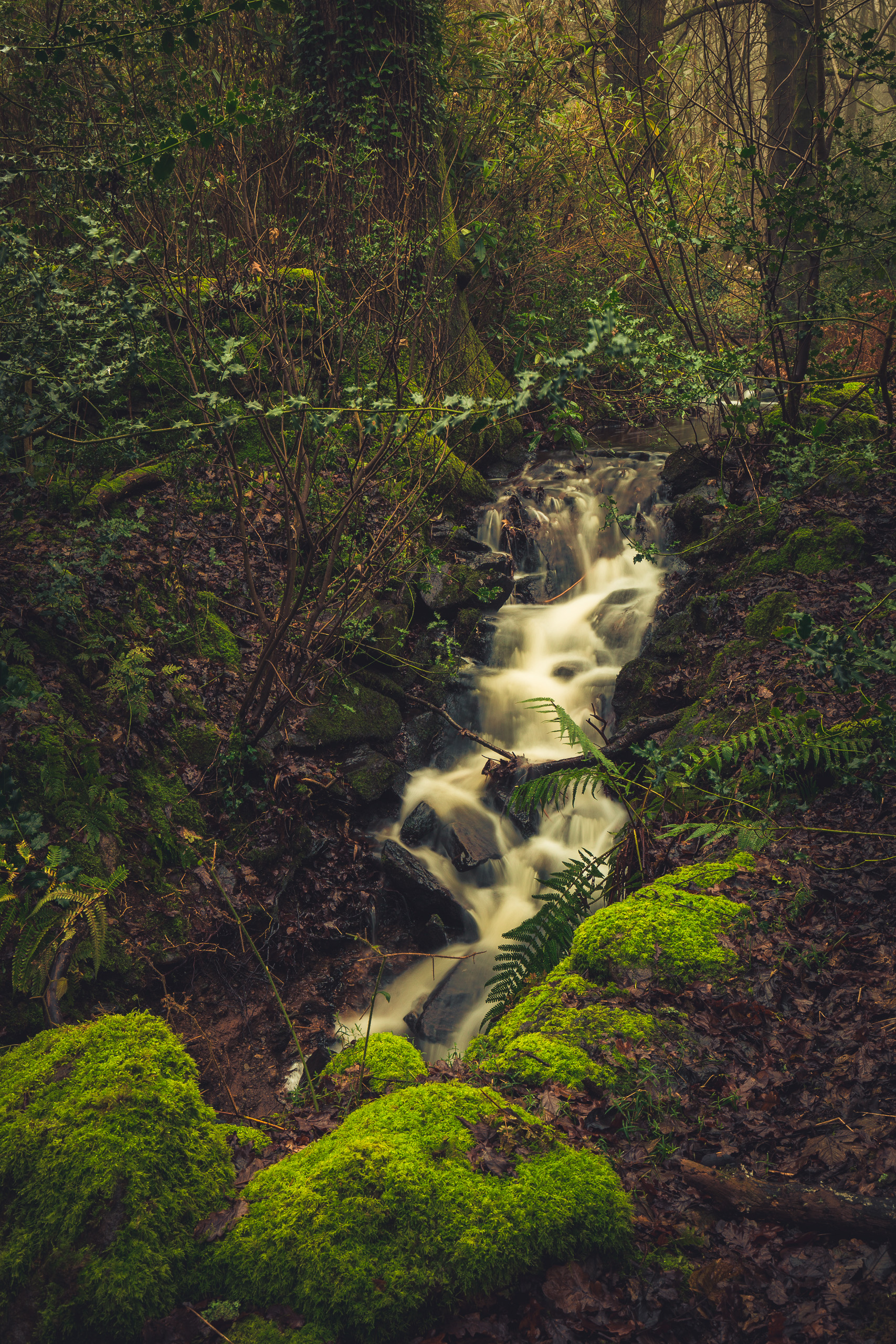
I think that’s the part I needed to see again, a year later.
A few notes on photographing woodland in winter
If you are tempted to go out on a grey, foggy day, here’s what has worked for me:
- Embrace the fog and overcast light. Soft light is kind to woodland. It removes harsh contrast and lets the colours of moss, bracken and bark come through.
- Find one subject. A forest is chaos. Look for a single tree, a shape, a colour, and then build the frame around it.
- Use a longer lens. A short telephoto compresses the layers of trees and isolates subjects from the clutter. Many of these images were made at 100mm.
- Bring a tripod. Winter woodland is dark, even at midday. A tripod lets you keep the ISO low, use a smaller aperture for depth, and slow down the water in streams.
- Look for colour accents. A few orange beech leaves or a patch of bright moss can carry an entire grey scene.
- Go slowly. The best images often come after you’ve stopped trying so hard to find them.
Where the forest remembers
I can’t say exactly where this wood is. It’s a quiet, fragile place, and I’d like it to stay that way. But I suspect you have a place like it somewhere near you: a patch of old trees you walk past without really looking.
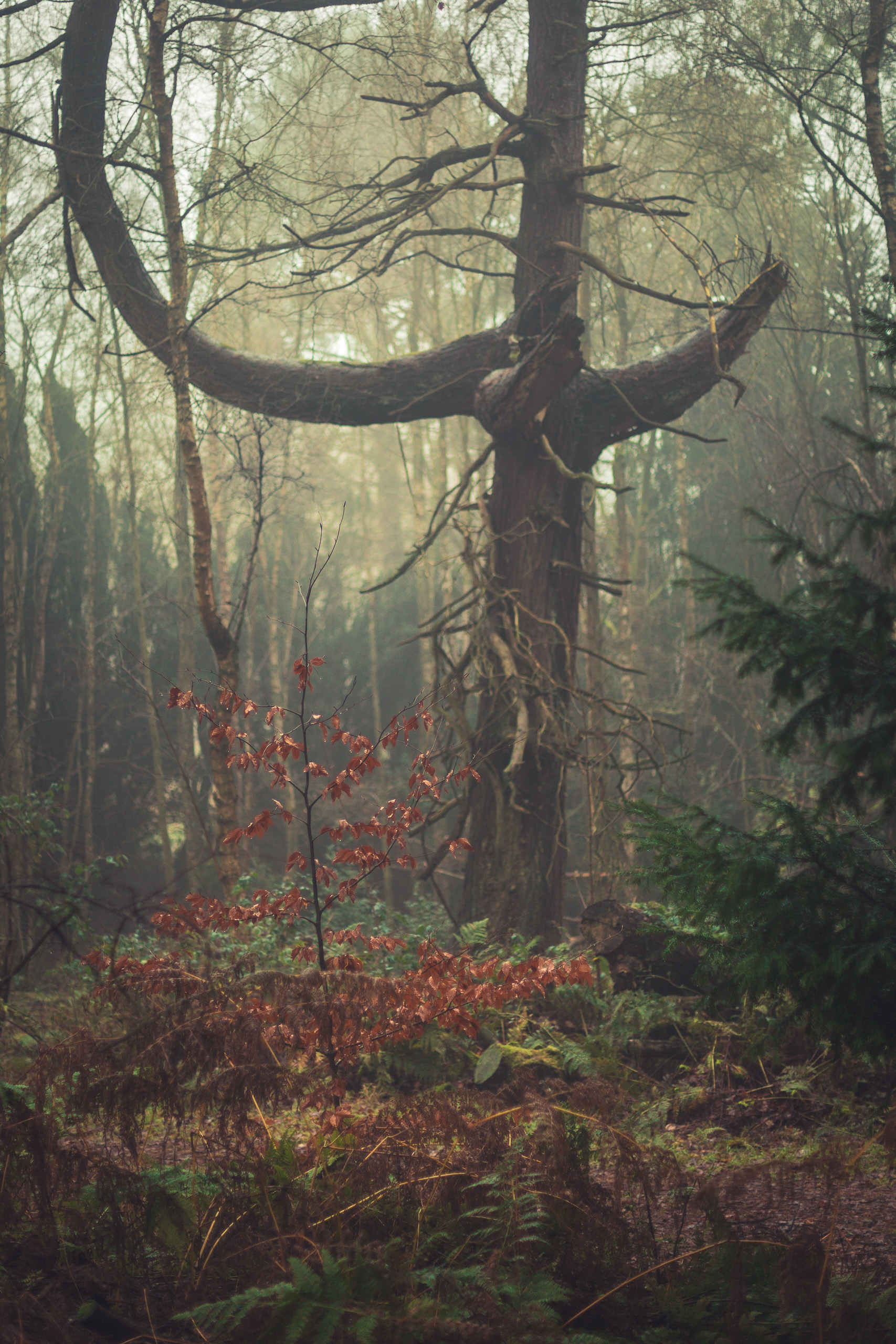
This last photograph is of a strange, twisted tree I’ve visited many times. In front of it, a young beech was still holding its copper leaves in the middle of winter, glowing like the last ember of a fire that hasn’t quite gone out. I didn’t see the metaphor when I pressed the shutter. I think I see it now.
If you’re in your own winter season at the moment, I hope you’re gentle with yourself. The trees don’t rush spring. Neither should we.
If any of these images speak to you, they are available as fine art prints. Feel free to get in touch.